The History of Haussmann's Paris: Why the City Looks the Way It Does
Picture Paris. You're probably imagining wide boulevards, cream-colored apartment buildings, wrought-iron balconies and rows of trees stretching toward a famous monument. That image of Paris didn't happen by accident. Much of the city we recognize today was shaped during the nineteenth century, when Napoleon III and a government official named Georges-Eugène Haussmann launched one of the most ambitious urban transformations in European history. The result was the Paris that millions of visitors come to see today. But behind its elegant façades lies a complicated history of modernization, displacement and political power.
Here's how Haussmann transformed Paris, why the city looks the way it does and where you can still see his influence today.
1. What Did Paris Look Like Before Haussmann?
Before the nineteenth-century transformation, much of central Paris looked very different from the city we know today. Many neighborhoods were crowded mazes of narrow medieval streets, with densely packed buildings and limited access to light and fresh air. Sanitation was a serious concern, and cholera epidemics highlighted the urgent need for improvements to the city's infrastructure.
Paris was also growing rapidly. Its existing streets struggled to accommodate increasing traffic, while the developing railway network brought more people into the capital. Napoleon III wanted to modernize the city, improve circulation and create a capital that reflected the power and ambitions of his empire.
In 1853, he appointed Georges-Eugène Haussmann as prefect of the Seine, giving him the authority to oversee an extraordinary program of urban redevelopment.
2. Who Was Baron Haussmann?
Georges-Eugène Haussmann was a French administrator, not an architect. Yet his name became so closely associated with Parisian architecture that an entire building style is now named after him. Working under Napoleon III, Haussmann coordinated the construction of new roads, parks, public buildings, sewers and water infrastructure. His vision went far beyond making Paris more attractive. The project aimed to improve public health, facilitate transportation and connect important districts and railway stations.
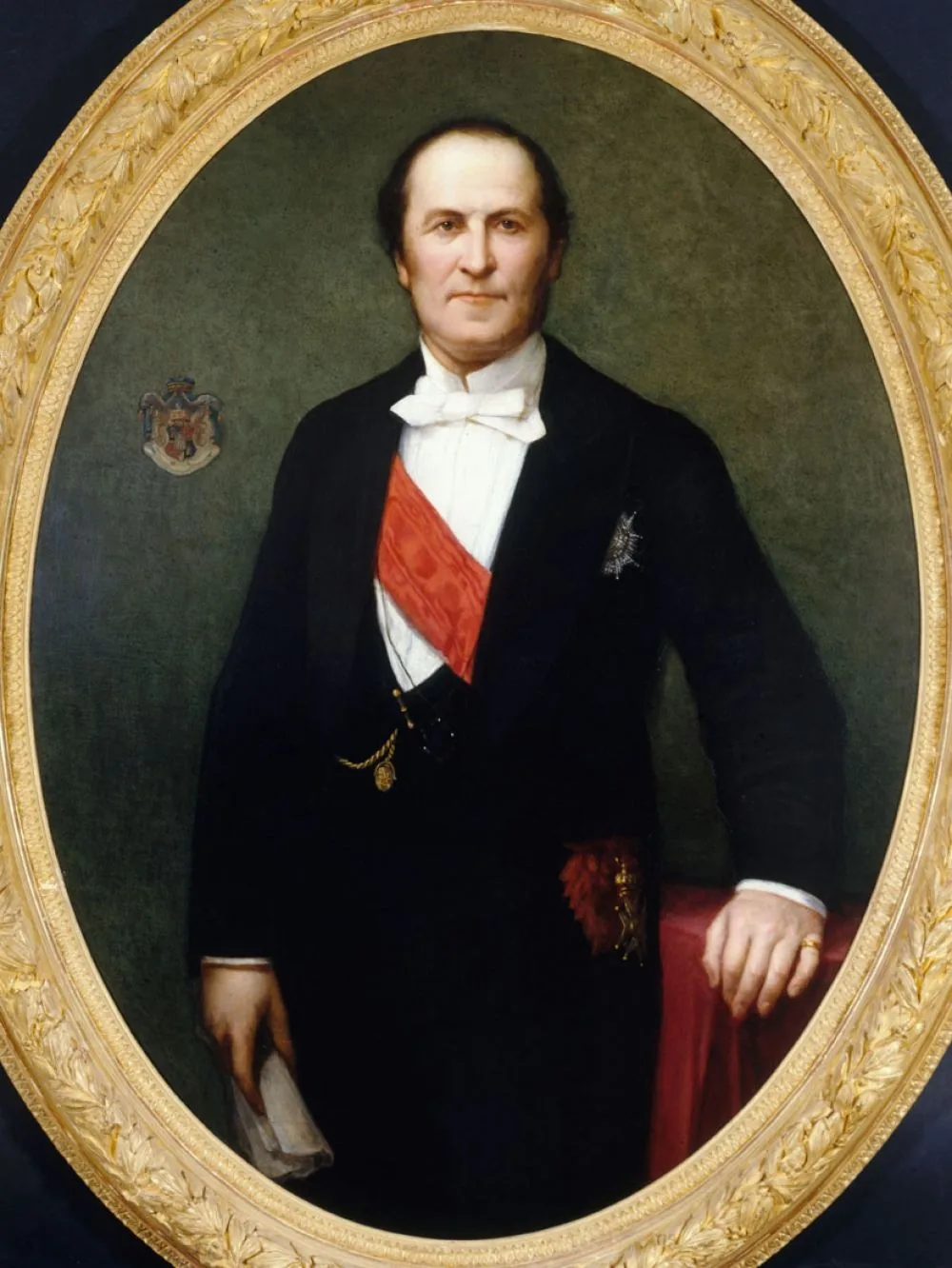
The redevelopment also made it easier for authorities and military forces to move through the city, a politically significant consideration in a capital with a history of uprisings and street barricades. Haussmann oversaw the transformation from 1853 until his dismissal in 1870, although many of the projects he initiated continued after he left office.
3. Why Do Parisian Buildings All Look So Similar?
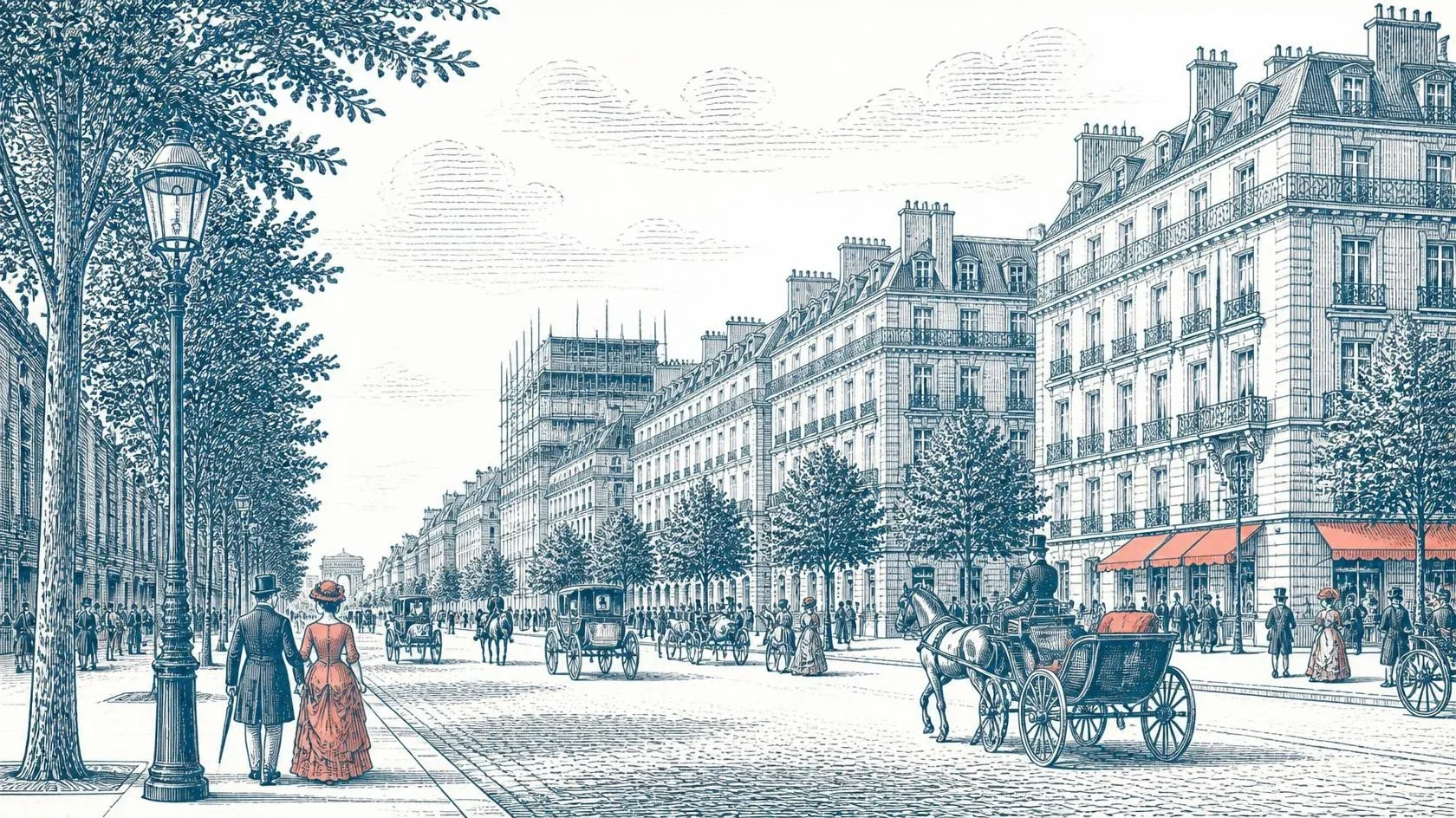
One of the most recognizable features of Haussmann's Paris is the uniform appearance of its apartment buildings. Along many of the new boulevards, buildings were constructed according to regulations governing their height, alignment and exterior appearance. This created the harmonious streetscapes that are now associated with classic Parisian architecture.
A typical Haussmann-style building has a pale stone façade, tall windows, decorative moldings, wrought-iron balconies and a sloping roof.
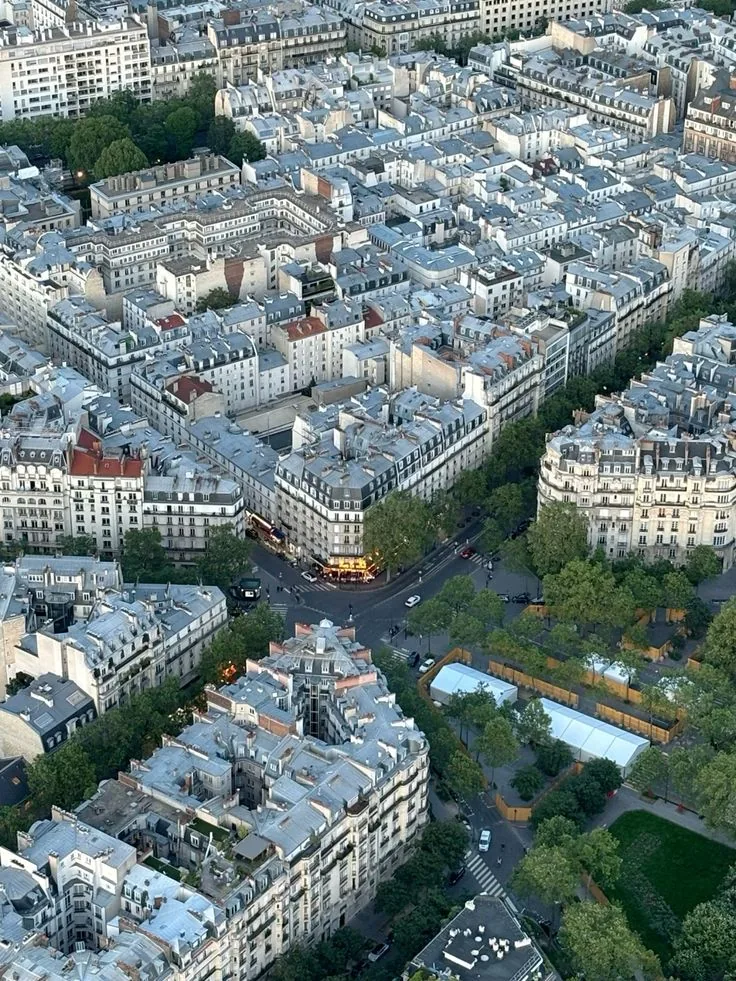
One of the most recognizable features of Haussmann's Paris is the uniform appearance of its apartment buildings. Along many of the new boulevards, buildings were constructed according to regulations governing their height, alignment and exterior appearance. This created the harmonious streetscapes that are now associated with classic Parisian architecture.
A typical Haussmann-style building has a pale stone façade, tall windows, decorative moldings, wrought-iron balconies and a sloping roof.
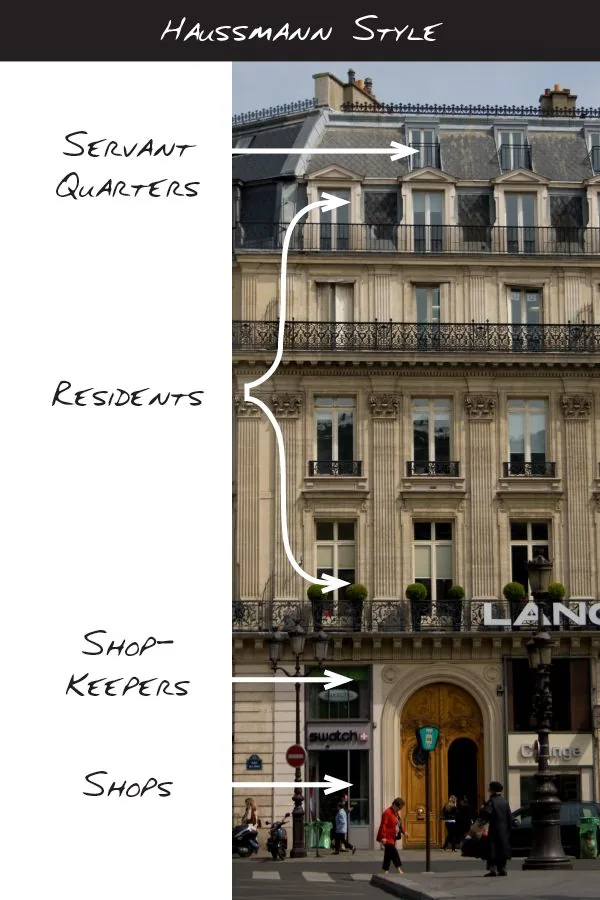
The arrangement of the floors also reflected the social structure of nineteenth-century Paris. The second floor, known as the étage noble, was traditionally the most desirable, with high ceilings and elaborate balconies. Higher floors generally became less prestigious, while small rooms beneath the roof were often occupied by domestic servants.
Today, those upper-floor apartments are frequently among the city's most sought-after homes, especially when they offer rooftop views.
4. The Boulevards That Changed Paris
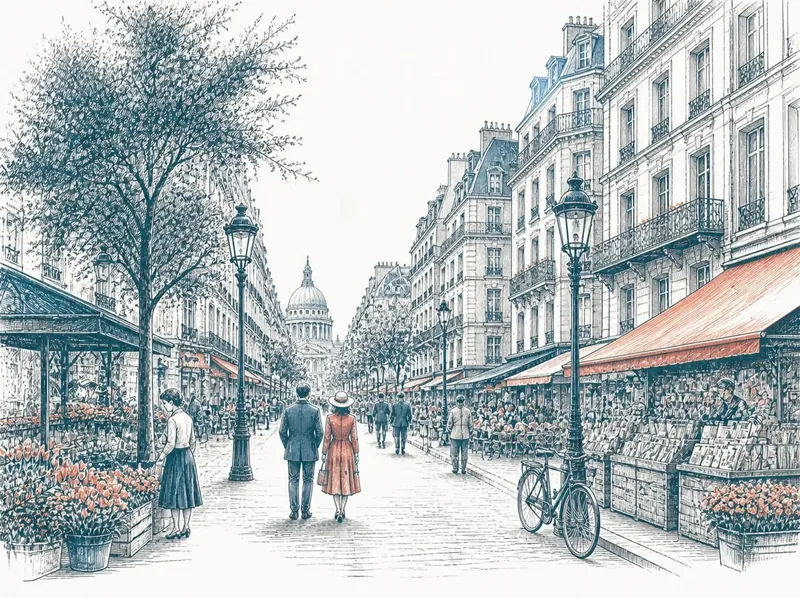
Haussmann's most visible contribution was the creation of wide, straight boulevards that cut through the older city. These new avenues improved movement between neighborhoods, railway stations and major landmarks. They also created long sightlines, making monuments and public buildings visible from a distance. Boulevard Haussmann, which bears his name, is one of the clearest examples of this transformation. Other major projects included the development of Boulevard Saint-Michel, Boulevard de Sébastopol and parts of the great avenues surrounding the Opéra district.
However, creating these streets required the demolition of thousands of existing buildings. Entire communities were disrupted, and rising property values pushed many lower-income residents toward the city's outer districts. The Paris we admire today came at a significant social cost.
5. The Hidden Transformation Beneath the Streets
Haussmann's transformation wasn't limited to what people could see above ground. Paris also received extensive improvements to its water supply and sewer infrastructure, with engineer Eugène Belgrand playing a central role in designing and expanding these systems. New underground networks helped address longstanding sanitation problems and supported the city's growing population.
Above ground, the redevelopment included public parks, squares and tree-lined streets designed to provide more open space. The Bois de Boulogne, Bois de Vincennes, Parc Monceau and Parc des Buttes-Chaumont all formed part of the broader nineteenth-century effort to expand and improve Paris's green spaces. Haussmann's legacy, therefore, extends far beyond architecture. It includes many of the systems that made modern urban life possible.
6. The Other Side of Haussmann's Transformation
Not everyone welcomed the new Paris. The redevelopment demolished large sections of the old city, disrupting established communities and displacing many working-class residents. Critics also questioned the enormous cost of the project and the political advantages of creating wide streets where barricades would be harder to build.
Yet the transformation also brought wider roads, improved sanitation, public gardens and new infrastructure. Haussmann's legacy is therefore more complicated than the beautiful buildings visitors admire today. His work fundamentally changed how Parisians lived, traveled and experienced their city.
Paris is even more interesting when you understand why its streets and buildings look the way they do. To explore some of the city's most famous landmarks with a local guide, discover TipWalk's 2.5-Hour Walking Tour Through the Heart of Paris.