Dark History Walk: Paris's Most Notorious True Crime & Execution Sites
Paris may be known as the City of Light, but some of its most famous streets and squares have witnessed remarkably dark events.
Behind the elegant architecture and busy café terraces lie stories of public executions, notorious criminal cases, revolutionary violence and prisons that once held some of France's most famous historical figures. Many of these places are still standing. Others have disappeared, leaving behind monuments, plaques or ordinary-looking streets where extraordinary events once unfolded.
If you're fascinated by true crime, French history or the darker side of Paris, this self-guided walk takes you through some of the city's most significant historical sites.
1. Place de la Concorde: Where the Guillotine Stood
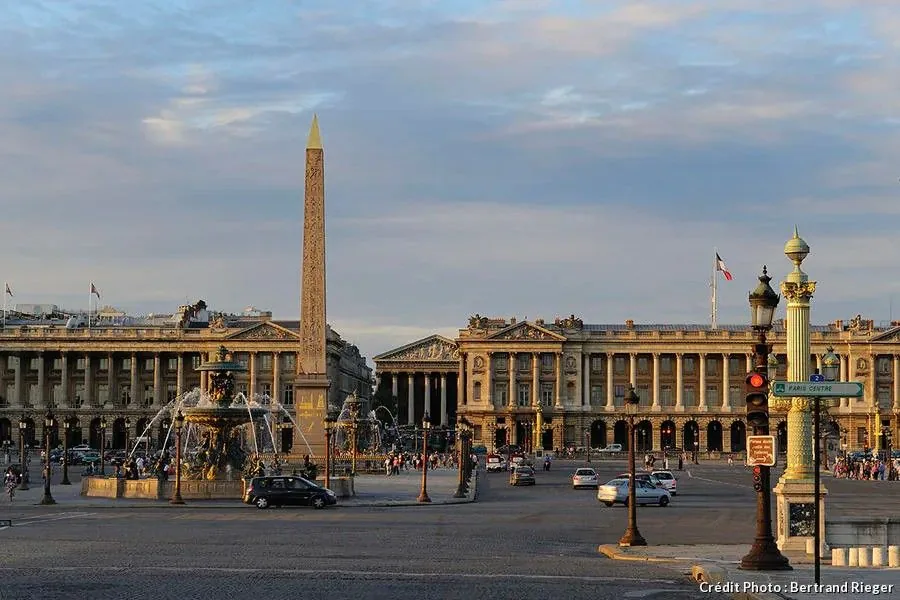
Today, Place de la Concorde is one of Paris's grandest squares, famous for its Egyptian obelisk, monumental fountains and views toward the Champs-Élysées. During the French Revolution, however, it was known as Place de la Révolution and became one of the city's principal execution sites.
King Louis XVI was executed here on January 21, 1793, followed by Marie Antoinette on October 16 of the same year. Revolutionary figures including Georges Danton and Maximilien Robespierre also met their deaths in the square. Thousands of people were executed by guillotine during the Revolution, although the executions took place at several different locations across Paris. Standing in the middle of Place de la Concorde today, surrounded by traffic and tourists, it's difficult to imagine the crowds that once gathered here to witness public executions.
2. The Conciergerie: Marie Antoinette's Final Prison
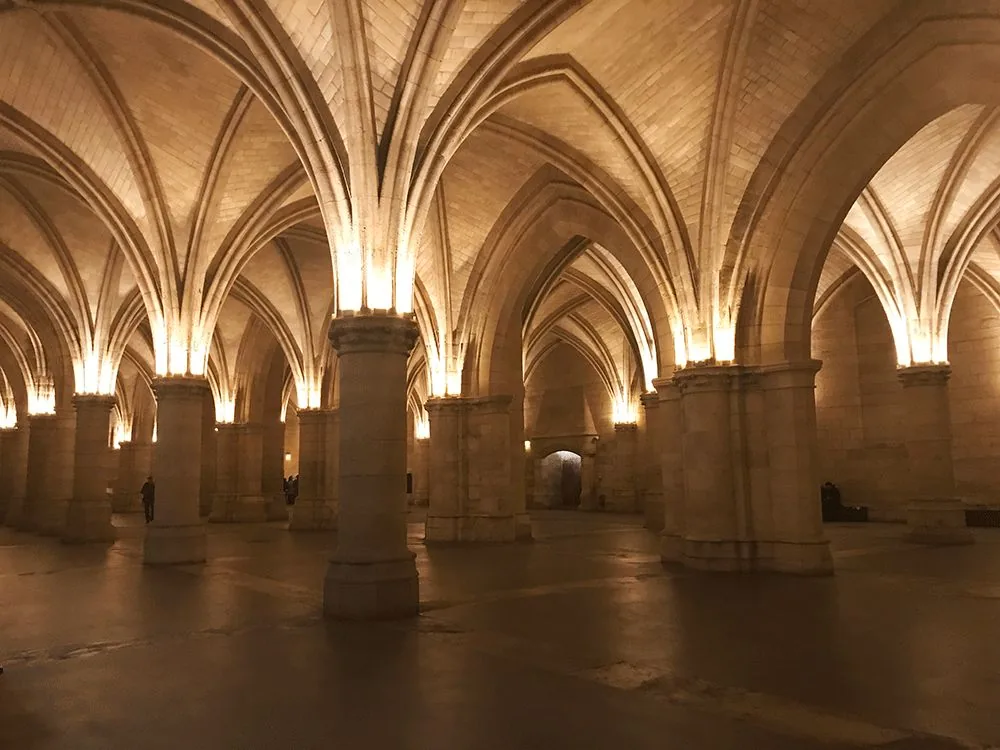
From Place de la Concorde, walk east along the Seine toward Île de la Cité. Here you'll find the Conciergerie, a former royal palace that became one of the French Revolution's most notorious prisons. During the Reign of Terror, prisoners awaiting trial before the Revolutionary Tribunal were held here. Among them was Marie Antoinette, who spent the final weeks of her life imprisoned in the building before her execution.
Today, visitors can explore the medieval halls and exhibitions about the Revolution, including spaces associated with the former prison. Unlike some historical sites where little remains of the original buildings, the Conciergerie still offers a powerful sense of its past.
3. The Place de Grève: Centuries of Public Executions
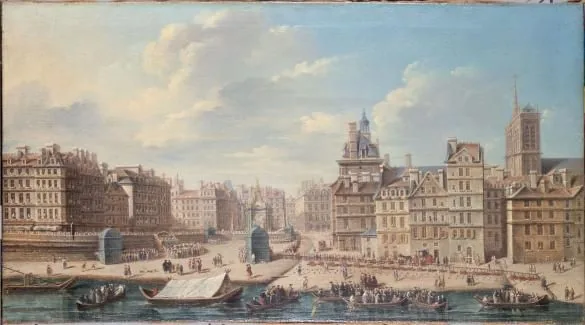
Cross to the Right Bank and head toward the Hôtel de Ville. The square in front of Paris City Hall was once called Place de Grève, a name closely associated with public executions. For centuries, condemned prisoners were brought here to face punishments that varied according to their alleged crimes and the laws of the period. One particularly notorious case was that of Robert-François Damiens, who attempted to assassinate King Louis XV in 1757. His execution at Place de Grève became infamous for its extreme brutality.
The square's appearance has changed dramatically since then. Today, it's a lively public space used for events, exhibitions and seasonal activities. But its history offers a striking reminder of how public punishment once formed part of everyday life in Paris.
4. The Square du Temple: The Prison That Disappeared
The next stop takes you into the Marais, where an ordinary-looking public garden occupies land once associated with one of Paris's most important prisons. During the French Revolution, the royal family was imprisoned in the Temple Tower. Louis XVI and Marie Antoinette were held here before being transferred elsewhere for their final trials and imprisonment.
Their young son, Louis XVII, died in captivity at the Temple in 1795. The tower was demolished under Napoleon, and the surrounding area was transformed over time. Today, Square du Temple–Elie Wiesel offers a peaceful contrast to the site's difficult history. Unlike the Conciergerie, there is no surviving prison building to explore. Instead, this stop is about discovering the history hidden beneath the modern city.
5. Rue Le Sueur: The Crimes of Marcel Petiot
For a different chapter of Parisian criminal history, head west toward Rue Le Sueur in the 16th arrondissement. During the German occupation of France, physician Marcel Petiot claimed he could help people escape occupied Paris. Instead, he murdered people who sought his assistance, taking advantage of their desperation and vulnerability. In 1944, investigators discovered human remains at his property on Rue Le Sueur. Petiot was subsequently tried, convicted of multiple murders and executed in 1946.
The case became one of the most notorious criminal investigations in twentieth-century France. The property is private, and this stop is considerably farther from the central Paris locations on our route. It's best treated as a separate detour rather than part of the main walking itinerary.
6. Place de la Nation and Picpus Cemetery: The Final Resting Place of Revolution Victims
For one final chapter of Revolutionary history, travel east to Place de la Nation. During the Revolution, this area was called Place du Trône-Renversé. Between June and July 1794, more than 1,300 people were executed here by guillotine in approximately six weeks. Their remains were transported to nearby mass graves, now preserved within Picpus Cemetery. Today, Picpus is a quiet, privately maintained cemetery and memorial. It is also the burial place of the Marquis de Lafayette, whose wife had family members among those executed during the Terror.
The cemetery provides a very different ending to a dark history walk. Rather than focusing on the execution sites themselves, it offers a place to remember the people whose lives were lost.
Explore More of Paris's Dark History with TipWalk
If you're interested in the stories behind Paris's most famous graves, pair this itinerary with TipWalk's Scandals, Gossips & Histoire: Tales at Père Lachaise Cemetery Tour Paris.
The tour explores the cemetery's famous residents and the scandals, relationships and historical events associated with their lives. It's a companion to this itinerary rather than a tour of the execution sites above.