Montmartre at Night: A Spookier Side of Paris's Most Famous Hill
During the day, Montmartre is full of charming cafés, artists painting in Place du Tertre and visitors climbing the steps toward Sacré-Cœur. But once the sun goes down, Paris's most famous hill takes on a completely different personality.
If you've already explored Montmartre in the morning, visiting after dark feels like discovering an entirely different neighborhood.
Here's where to walk, what to see and how to experience Montmartre's slightly spookier side.
Why Does Montmartre Feel So Different at Night?
Montmartre was once a village outside central Paris, known for its windmills, vineyards and rural atmosphere. During the nineteenth century, it became a gathering place for artists, writers and performers, many of whom were drawn to its relatively affordable accommodation and lively cabaret culture.
Its history isn't all romantic, though. The hill also witnessed political unrest, including events associated with the Paris Commune of 1871. Its cabarets and nightlife have long been surrounded by stories of scandal, rebellion and unconventional artistic lives.
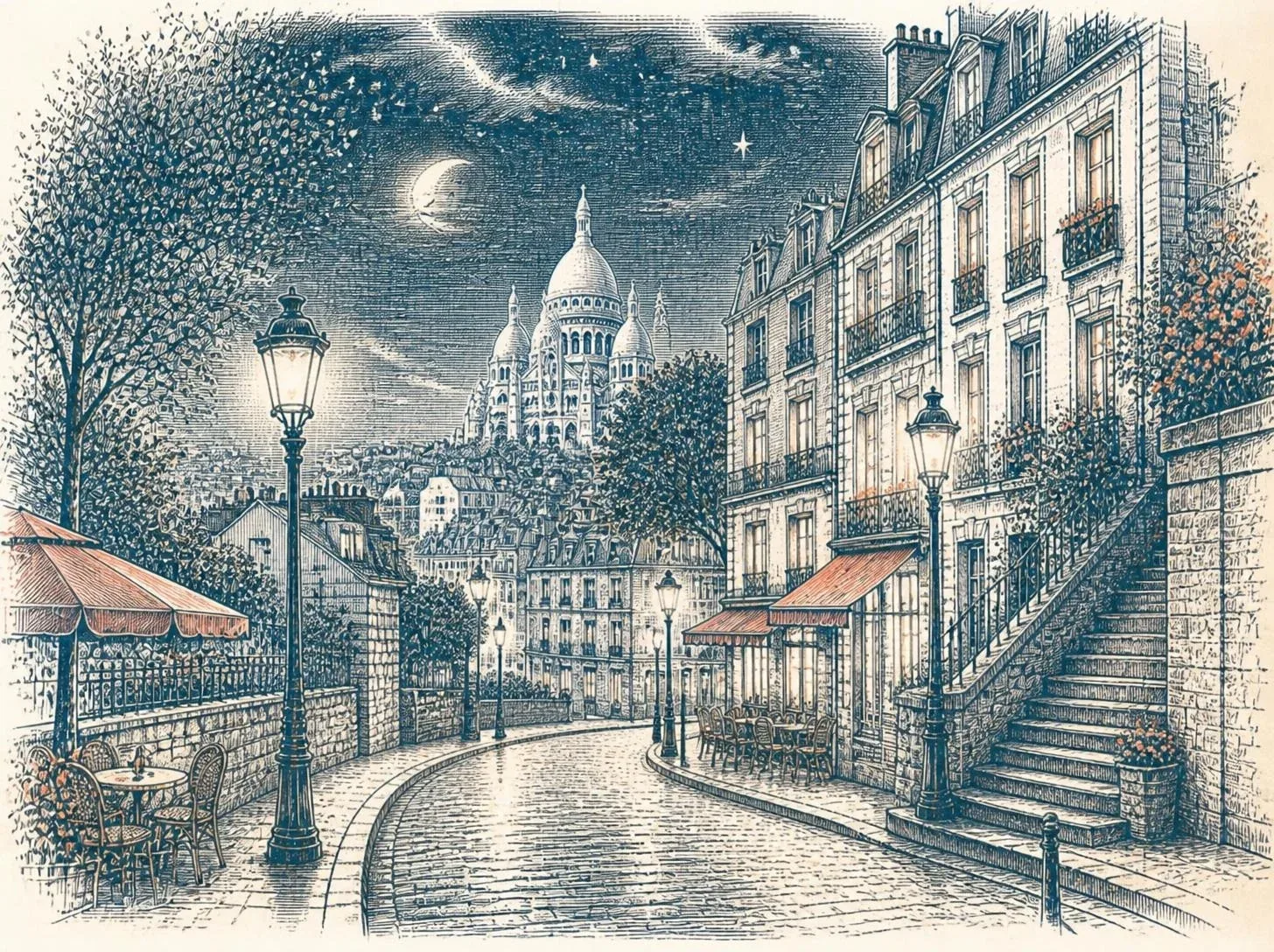
Today, Montmartre is one of Paris's most visited neighborhoods, but its narrow streets and steep staircases still retain traces of that older atmosphere. At night, those details become much easier to notice.
1. Start at the Moulin Rouge
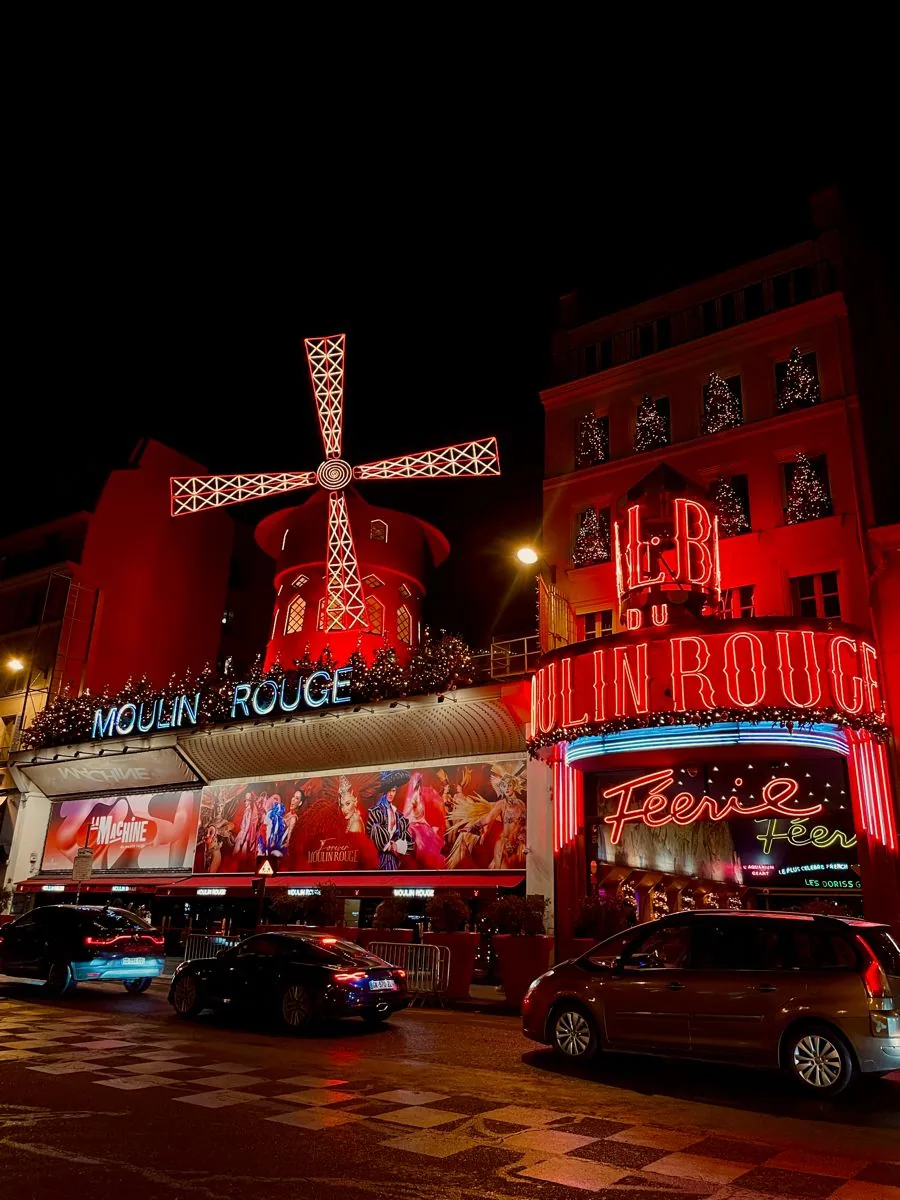
Begin your evening at the famous Moulin Rouge, at the foot of Montmartre. Opened in 1889, the Moulin Rouge became one of the symbols of Parisian nightlife, attracting artists, performers and fashionable crowds. Its red windmill remains one of the neighborhood's most recognizable landmarks. The surrounding Pigalle district is lively rather than spooky, with bright signs, theaters, bars and late-night activity. It's an interesting contrast to the quieter streets you'll encounter as you climb the hill.
2. Follow the Streets of Montmartre's Cabaret Past
As you climb toward the upper part of Montmartre, make your way toward Rue Lepic and Rue des Abbesses. These streets are filled with cafés, independent shops and reminders of the neighborhood's artistic past. At night, their illuminated storefronts and old buildings create a completely different atmosphere from the busy daytime scene.
For a detour, head toward the historic cabaret Au Lapin Agile, a small pink building near the upper slopes of Montmartre. Once frequented by artists and writers, including Picasso, Au Lapin Agile has been part of Montmartre's cultural landscape for generations.
Its modest appearance makes it easy to overlook, but its history is closely connected to the neighborhood's bohemian identity.
3. Discover the Mysterious Passe-Muraille
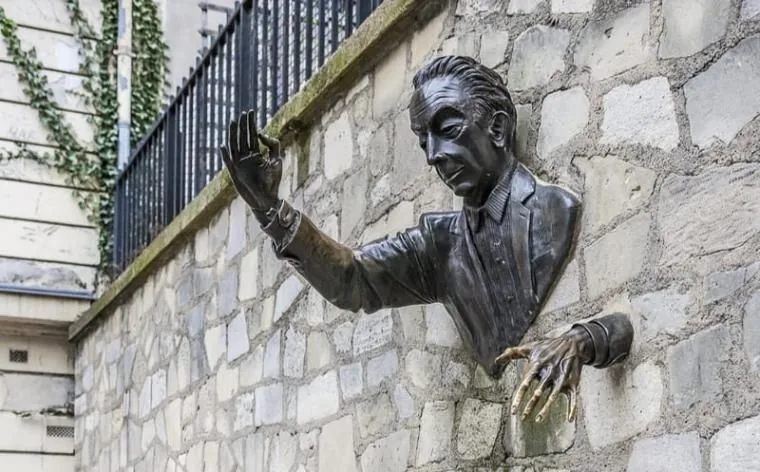
One of Montmartre's most unusual hidden corners is the Passe-Muraille, or Man Who Walked Through Walls. Tucked away in Place Marcel Aymé, this sculpture depicts a man emerging from a stone wall. It was inspired by a short story by French writer Marcel Aymé, who lived in Montmartre. In the story, an ordinary man discovers that he can walk through walls, but his unusual ability eventually leads to an unexpected fate. The sculpture is especially atmospheric in the evening, when the surrounding streets are quieter and the figure seems to emerge from the shadows. It's not a haunted location, but it might be Montmartre's most fitting stop for anyone who enjoys an eerie story.
4. Walk Along Rue de l'Abreuvoir
If there's one street that captures Montmartre's quieter side, it's Rue de l'Abreuvoir. With its gently curving cobblestones, historic houses and famous pink café, La Maison Rose, this is one of the neighborhood's most photographed corners. During the day, you'll often find visitors stopping for photographs. Later in the evening, the atmosphere can feel considerably calmer. The old buildings and soft street lighting make it easy to picture the village that existed here long before Montmartre became a major tourist destination.
5. Find the Vineyard Hidden Behind the Streets
Not far from Rue de l'Abreuvoir is the Clos Montmartre, the neighborhood's small surviving vineyard. It's an unexpected sight in the middle of Paris and a reminder of Montmartre's rural past. The vineyard is generally closed to casual visitors, but you can admire it from the surrounding streets. Nearby, the quieter stretch of Rue des Saules adds to the feeling that you've wandered into a village rather than one of Europe's busiest capitals.
6. Explore Place du Tertre After the Crowds
Place du Tertre is famous for its portrait artists and bustling café terraces. During the day, it can be one of Montmartre's busiest spots. But return later in the evening, particularly outside the busiest tourist season, and you may find a different atmosphere.
The restaurants remain illuminated, visitors linger over dinner and the surrounding streets begin to quiet down. It's an excellent place to stop for a meal or simply enjoy the contrast between the lively square and the quieter lanes nearby.
7. End at Sacré-Cœur After Dark
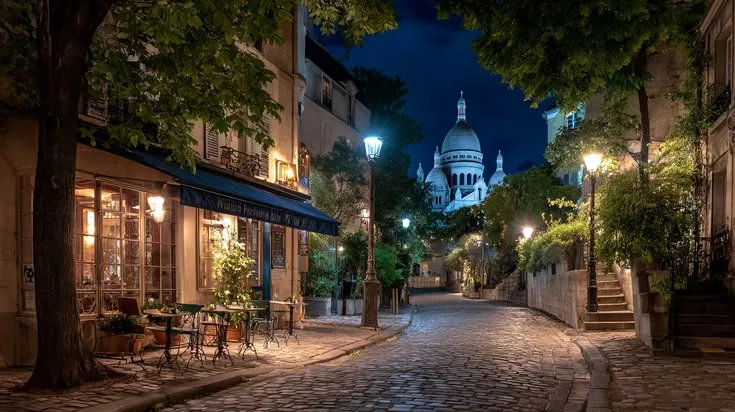
There's no better place to finish your evening than the steps of Sacré-Cœur. The white basilica is illuminated against the night sky, while the city stretches out below in a sea of lights. The viewpoint is popular in the evening, so don't expect complete solitude, especially on weekends. But the panorama is still one of the most memorable ways to experience Paris after dark.
Discover Montmartre with TipWalk
Want to understand the stories behind the streets before exploring them after dark? TipWalk's Exploring the Streets of Montmartre walking tour is a natural companion to this itinerary. Explore the neighborhood with a local guide, learn about its artistic heritage and discover the places that give Montmartre its distinctive character.
Then return in the evening to experience those same streets in a completely different light.