All Saints’ Day in Paris: Visiting Père Lachaise and the Cemeteries on Toussaint
Every autumn, Paris's cemeteries take on a different atmosphere. As November begins, graves are decorated with chrysanthemums, families gather to remember loved ones, and the city's historic burial grounds become places of reflection as well as fascinating windows into French history.
This tradition is especially visible on Toussaint, or All Saints' Day, on Sunday, November 1, 2026. While many visitors associate Paris with its museums, monuments, and cafés, the city's cemeteries reveal another side of its cultural identity, one shaped by remembrance, art, architecture, and the lives of people who helped define French history.
If you're visiting Paris around Toussaint, Père Lachaise Cemetery is an especially rewarding place to explore. From elaborate tombs and quiet tree-lined avenues to the graves of internationally renowned artists and writers, it offers a unique way to discover the city beyond its usual landmarks.
Here's what to know about Toussaint in Paris, the cemetery opening hours for November 1, and how to explore Père Lachaise respectfully.
What Is Toussaint in France?
Toussaint is the French name for All Saints' Day, a Christian holiday observed every year on November 1. In France, the day is closely associated with remembering deceased family members and visiting cemeteries.
In the days leading up to Toussaint, families often visit graves to clean them, arrange flowers, and spend time remembering loved ones. Chrysanthemums are particularly associated with the occasion and are commonly placed on graves throughout the country.
Although Toussaint is a religious holiday, the tradition of visiting cemeteries has a wider cultural significance. It is a moment when remembrance becomes visible in public spaces, with cemetery paths filled with flowers and families gathering at graves that may otherwise receive fewer visitors throughout the year.
For travellers, this offers an opportunity to understand a meaningful part of French life. Visiting a cemetery during Toussaint is not simply a sightseeing activity; it is also an opportunity to observe a tradition rooted in family, memory, and respect.
Are Paris Cemeteries Open on November 1, 2026?
Yes. Paris's municipal cemeteries will open to visitors on Sunday, November 1, 2026, for Toussaint.
According to the City of Paris's published schedule, the major cemeteries, including Père Lachaise, Montmartre, and Montparnasse, will be open from 9 AM to 6 PM on All Saints' Day.
Some smaller cemeteries follow different schedules, including a midday closure, so it is important to check the opening hours for the specific cemetery you intend to visit.
Here are the essential details for the day:
- Date: Sunday, November 1, 2026
- Père Lachaise opening hours: 9 AM–6 PM
- Admission: Free for individual visitors
- Best approach: Arrive earlier in the day and allow enough time to explore without rushing
- Official information: City of Paris, Toussaint cemetery opening hours
Toussaint is one of the busiest periods of the year for Paris's cemeteries, with the City of Paris anticipating more than 200,000 visits across its cemetery network around November 1. Expect more visitors than usual, particularly at the most famous burial grounds.
If you want a quieter experience, consider visiting earlier in the morning while remembering that families may be visiting graves throughout the day.
Père Lachaise Cemetery: A Different Side of Paris
Located in the 20th arrondissement, Père Lachaise is the largest cemetery within Paris proper and one of the most famous burial grounds in the world.
Opened in 1804, the cemetery was initially met with resistance because it was located outside the traditional centre of Paris. Its reputation grew over time, particularly after the remains of notable figures were transferred there. Today, it is known for its winding paths, elaborate funerary sculptures, historic tombs, and the extraordinary range of people buried within its grounds.
Père Lachaise is both a working cemetery and a cultural landmark. People continue to visit to mourn, remember, and care for graves, while others come to discover the stories of the artists, writers, musicians, and political figures whose lives shaped history.
During Toussaint, this dual identity becomes especially apparent. The cemetery is a place of remembrance first, but its architecture and history also make it one of Paris's most distinctive places to explore on foot.
Famous Graves to Look For
Père Lachaise is home to the graves of numerous well-known figures. Some are recognised for their artistic contributions, while others are remembered for their influence on politics, literature, or music.
Jim Morrison: The Doors frontman is among the cemetery's most visited graves. His burial place has become a destination for music fans from around the world.
Édith Piaf: One of France's most celebrated singers, Piaf remains an enduring symbol of French popular music. Her grave attracts admirers who continue to connect with her songs and extraordinary life story.
Frédéric Chopin: The Polish composer spent much of his adult life in Paris and remains one of the most influential figures in classical music.
Oscar Wilde: The Irish writer's elaborate tomb is one of Père Lachaise's most recognisable monuments. It reflects the lasting international fascination with his literary work and life.
These graves are only a small selection of the cemetery's many notable resting places. Part of the experience is discovering the stories behind the names and learning how different lives intersect with the history of Paris.
What Makes Père Lachaise Special During Toussaint?
Père Lachaise is worth visiting throughout the year, but Toussaint offers a different perspective on the cemetery.
1. The Cemetery Becomes a Place of Collective Remembrance
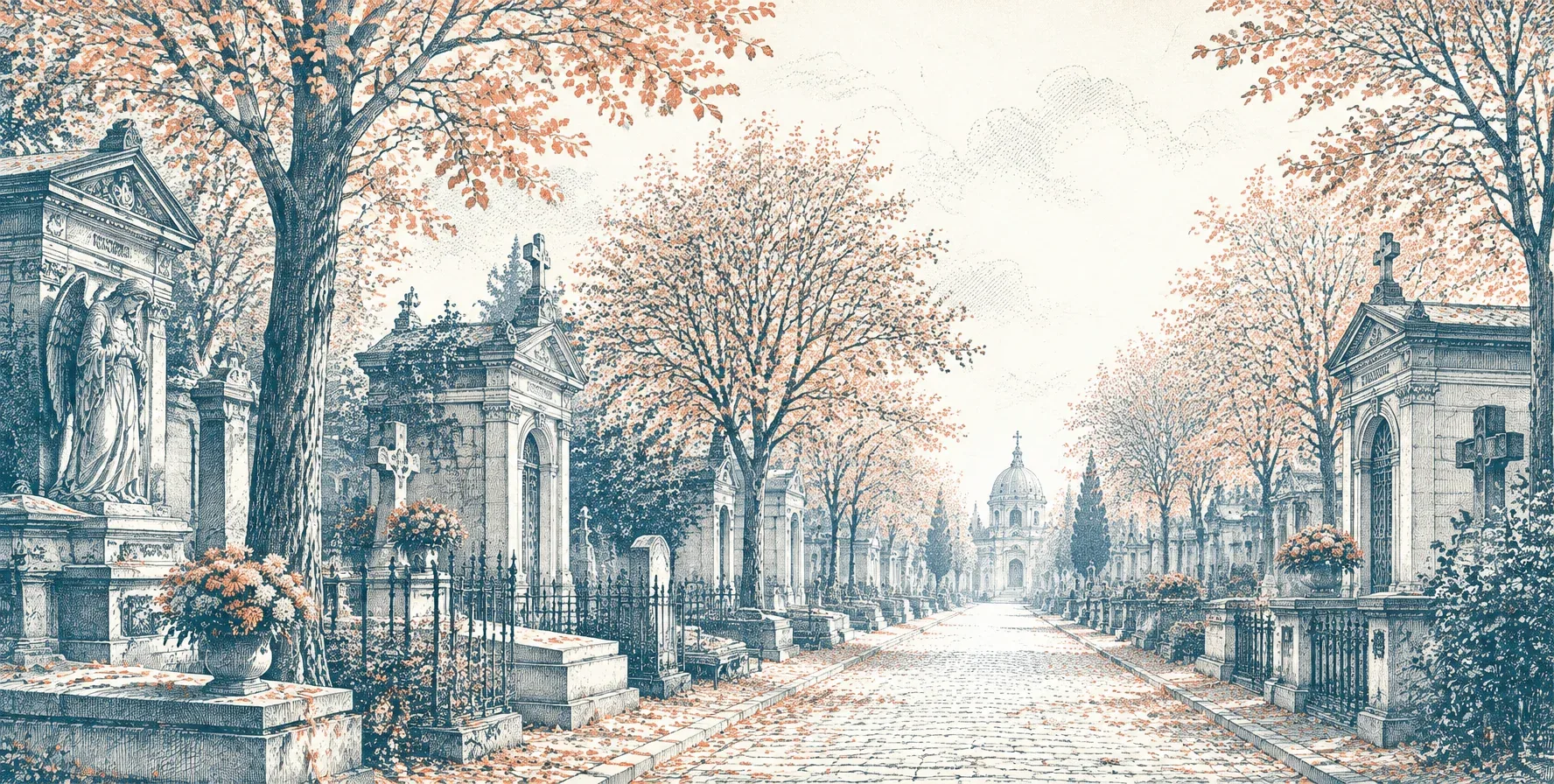
During the days surrounding November 1, graves across Paris are decorated with flowers, particularly chrysanthemums. The effect is visible throughout Père Lachaise, where family burial plots and historic monuments coexist along the cemetery's winding avenues.
It is a reminder that the cemetery is not simply an open-air museum. For many people, it remains a deeply personal place where memories are maintained through small, meaningful gestures.
2. Autumn Changes the Atmosphere
Early November brings shorter days, cooler temperatures, and autumn colours to Paris. At Père Lachaise, the trees and winding paths create an atmosphere that feels very different from the city's busy boulevards.
The combination of historic stonework, fallen leaves, and seasonal flowers makes this an especially atmospheric time to explore the cemetery.
Wear comfortable shoes and allow extra time for walking. The grounds are extensive, and some paths are uneven or sloped.
3. The Cemetery Reveals Parisian History Through Its Architecture
Père Lachaise contains an extraordinary variety of funerary architecture, from modest family tombs to elaborate mausoleums and sculpted monuments.
Walking through its sections reveals changing artistic styles and different approaches to commemoration. The cemetery's layout also reflects the evolution of Paris over more than two centuries.
Rather than focusing exclusively on famous graves, take time to notice the details: inscriptions, carved figures, ironwork, and the ways families have chosen to memorialise their loved ones.
Other Paris Cemeteries Worth Visiting on Toussaint
Although Père Lachaise is the most famous, it is not the only cemetery in Paris worth discovering. The city's historic burial grounds each offer a different atmosphere and connection to the surrounding neighbourhood.
Montmartre Cemetery
Located beneath the streets of Montmartre, this cemetery is surrounded by the neighbourhood's artistic history. Its paths pass beneath bridges and between tombs associated with writers, composers, performers, and other notable figures.
It is a natural addition to a day exploring Montmartre, particularly if you are interested in the area's cultural past.
Montparnasse Cemetery
In the south of Paris, Montparnasse Cemetery offers a quieter alternative to some of the city's busiest tourist attractions. Its avenues contain the graves of prominent intellectuals, artists, and writers, reflecting the neighbourhood's long association with Parisian literary and artistic life.
It can be combined with a walk through the surrounding district, which is known for its cafés, theatres, and historic connections to the city's creative communities.
Picpus Cemetery
Picpus Cemetery has a very different historical significance. It contains mass graves associated with people executed during the French Revolution, along with the grave of the Marquis de Lafayette.
Unlike Père Lachaise, Picpus is privately maintained and is not generally open on the same basis as Paris's municipal cemeteries. Check its official visiting arrangements before planning a visit.
Each cemetery tells a different story. If you have time for only one, Père Lachaise offers an especially rich introduction to Paris's funerary art and cultural history.
How to Visit Père Lachaise Respectfully
Because Toussaint is a significant day for families remembering loved ones, it is important to approach the cemetery with care.
Keep noise to a minimum. Speak quietly, particularly near people visiting family graves. Avoid loud conversations, music, or behaviour that might disturb others.
Be mindful when taking photographs. Architectural details and public monuments may be photographed, but avoid photographing grieving visitors or private family moments. If a particular area is being used for remembrance, give people space.
Do not touch or disturb graves. Flowers, decorations, and personal objects are meaningful to the people who place them there. Do not move items, sit on tombs, or leave anything behind.
Stay on accessible paths. Follow cemetery signs and any instructions from staff. Some areas may have restrictions, and certain paths can be uneven.
Allow space for families. During Toussaint, some visitors will be there for personal reasons rather than sightseeing. If an area is crowded around a grave, return later rather than interrupting a moment of remembrance.
These simple considerations help preserve the cemetery as both a public place of historical interest and a meaningful space for the people who visit it to remember loved ones.
Plan Your Visit: Practical Tips for November 1
If you're planning to visit Père Lachaise on Toussaint, a little preparation will help you make the most of your time.
Arrive early. The cemetery opens at 9 AM on Sunday, November 1. An early visit can give you more time to explore before the busiest part of the day.
Allow at least two hours. Père Lachaise is large, and finding particular graves can take time. If you want to explore the cemetery's history in greater depth, allow longer.
Plan your route in advance. Decide whether you want to focus on famous graves, funerary architecture, or a broader walk through the cemetery. A map can help you avoid spending too much time retracing your steps.
Dress for autumn weather. November in Paris can be chilly and damp. Wear layers and comfortable shoes, especially if you plan to explore for several hours.
Check transport and access information. Père Lachaise has several entrances and is served by nearby metro stations. Check the official cemetery page for current access information before travelling.
Remember that Toussaint is a day of remembrance. The cemetery may feel busier and more personal than on a typical sightseeing day. Be patient, respectful, and prepared to adapt your route if certain areas are crowded.
For the latest information, consult the official Père Lachaise Cemetery page.
Discover the Stories Behind Père Lachaise with TipWalk
Père Lachaise is much more than a collection of famous graves. Behind its monuments are stories of ambition, heartbreak, artistic achievement, scandal, and political change.
If you want to understand the people buried here and the events that shaped their lives, consider joining TipWalk's Scandals, Gossips & Histoire: Tales at Père Lachaise Cemetery Tour Paris.
This 2.5-hour walking tour explores the cemetery's fascinating history, from the stories surrounding Jim Morrison and Édith Piaf to the scandals, relationships, and political intrigues connected to other notable figures.
TipWalk tours are tip-based, with no upfront booking fees. You can reserve your place at no cost and tip your guide according to the experience at the end of the walk. Check the tour page for available dates and booking details, especially if you're planning to visit during the busy Toussaint period.
The tour is a particularly good option for travellers who want to go beyond locating famous graves and discover the stories that make Père Lachaise such a remarkable part of Paris.
Final Thoughts
Toussaint offers a meaningful opportunity to discover another side of Paris. On Sunday, November 1, 2026, the city's cemeteries will welcome visitors alongside families coming to remember loved ones, creating a distinctive atmosphere shaped by flowers, history, and reflection.
Père Lachaise is an especially rewarding destination, combining remarkable funerary art with the stories of people whose lives continue to influence music, literature, politics, and culture.
If you visit, take your time. Explore the paths, notice the details, and remember that behind every monument is a life and a story.
And if you want to discover those stories with a local guide, TipWalk's Père Lachaise walking tour offers a deeper look into one of Paris's most fascinating historic places.